
This post talks about self-harm. If you are worried about a child right now, call 999 if they are in danger. Children can call Childline free on 0800 1111, and parents can call the YoungMinds Parents Helpline on 0808 802 5544.
Short answer: The 764 group is one of many online gangs that police call Com networks. Their members, mostly teenage boys and young men, find children on games and social media, befriend them, then use threats and blackmail to push them into sexual abuse and into hurting themselves. Most of their victims are girls aged 11 to 17. Reports of Com groups rose six-fold in the UK between 2022 and 2024, and in October 2026 Police Scotland joined the police forces already hunting them. The best protection is a child who knows they can tell you anything without getting into trouble.
In short:
- 764 is one group inside a wider network called the Com, short for “the community”.
- These groups find children on ordinary games and apps, not on the dark web.
- They are friendly first, then move the chat to private apps and start making threats.
- Watch for sudden secrecy, unexplained injuries, and a new online friend your child will not talk about.
- If you are worried, stay calm, tell your child they are not in trouble, and report it to CEOP or the police.
What is the 764 group?
The 764 group is an online network that grooms and blackmails children into harming themselves and others. It is one of the best-known groups inside a much larger collection of online gangs that police call the Com.
Police say these groups chase status, not money. In March 2025, the National Crime Agency (NCA) warned that members gain standing among each other by causing the most harm and sharing the most disturbing content. The NCA also stressed that the groups are not hidden on the dark web. They use the same games and messaging apps your child uses.
What is the Com network?
The Com, short for “the community”, is a loose collection of online groups involved in child abuse, blackmail, fraud and violent extremism. Groups appear, split and rename themselves all the time. The 764 group and a group called CVLT have both come up in recent UK court cases, but the names matter less than the pattern. Any Com group works in a similar way, and the advice in this post applies to all of them.
What the news says about 764 and Com groups
On 30 October 2026, BBC News reported that Police Scotland had joined police forces around the world in targeting Com groups. A Police Scotland detective told the BBC that most of the victims they find are vulnerable girls aged 11 to 17, and that abusers often reach them first through “innocuous gaming platforms”. Police Scotland has made one arrest so far, and courts in England have convicted a handful of members.
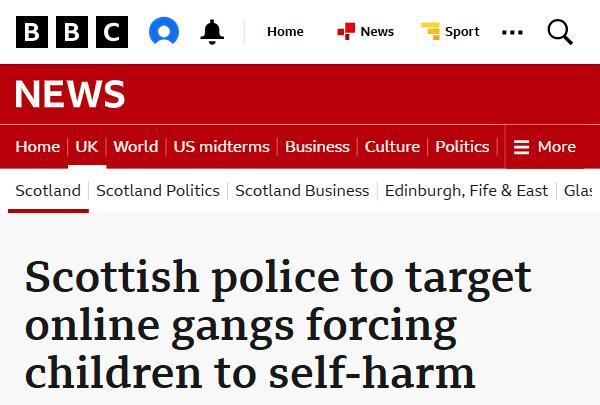
Screenshot: BBC News, 30 October 2026
Warnings about the 764 group and the wider Com are not new. In March 2025, the NCA said reports of Com groups had risen six-fold in the UK in two years, and that most offenders were teenage boys targeting children their own age or younger. Some of the girls police identified were as young as 11.
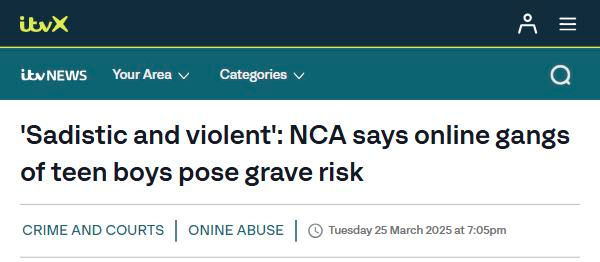
Screenshot: ITV News, 25 March 2025
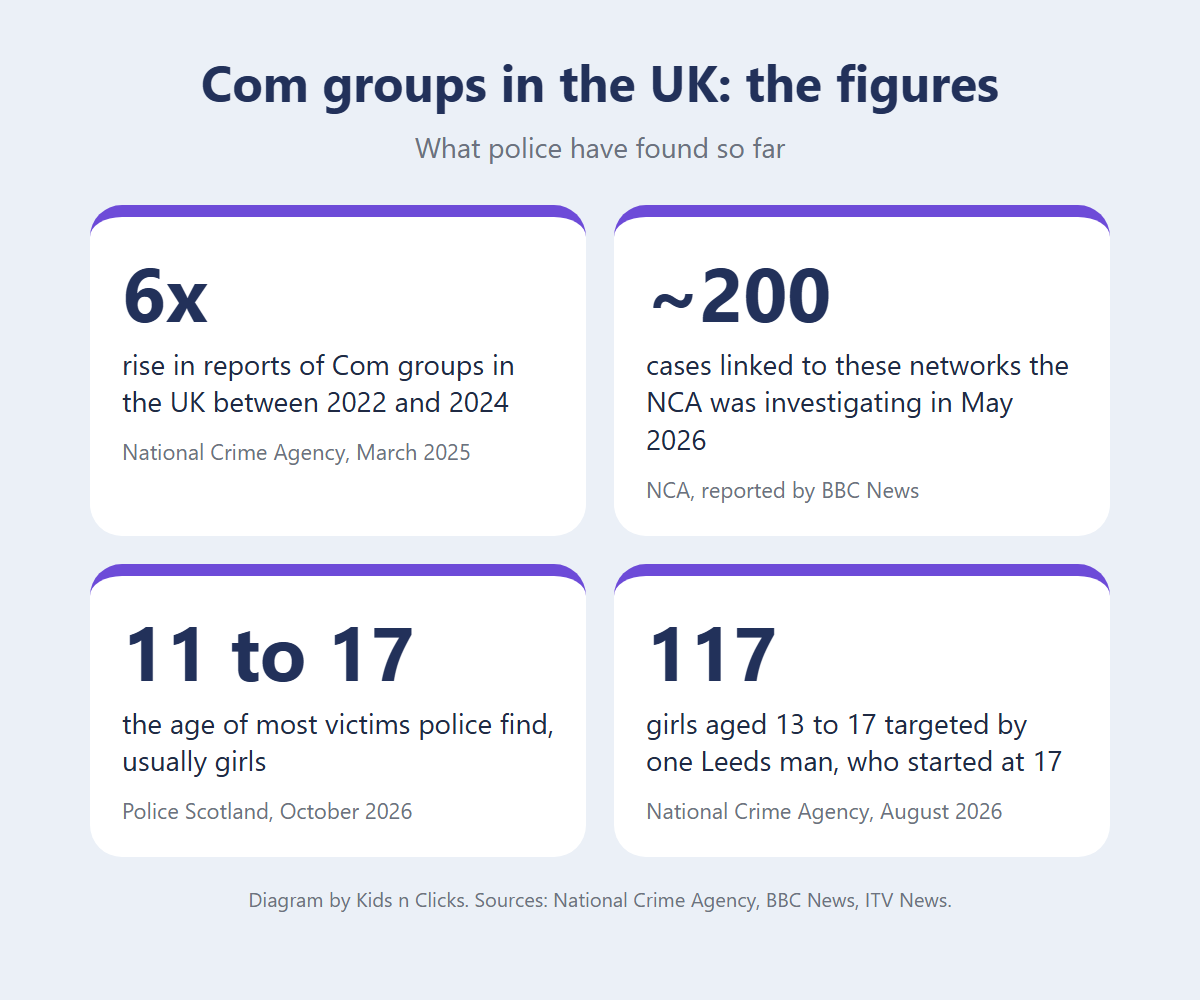
In August 2026, a court in Leeds jailed one Com group member for two years. The NCA found he had targeted 117 girls aged 13 to 17 around the world, eight of them in the UK, and pushed them into sexual abuse and self-harm. He started when he was 17, and he reached his victims on Snapchat, Telegram and Discord.
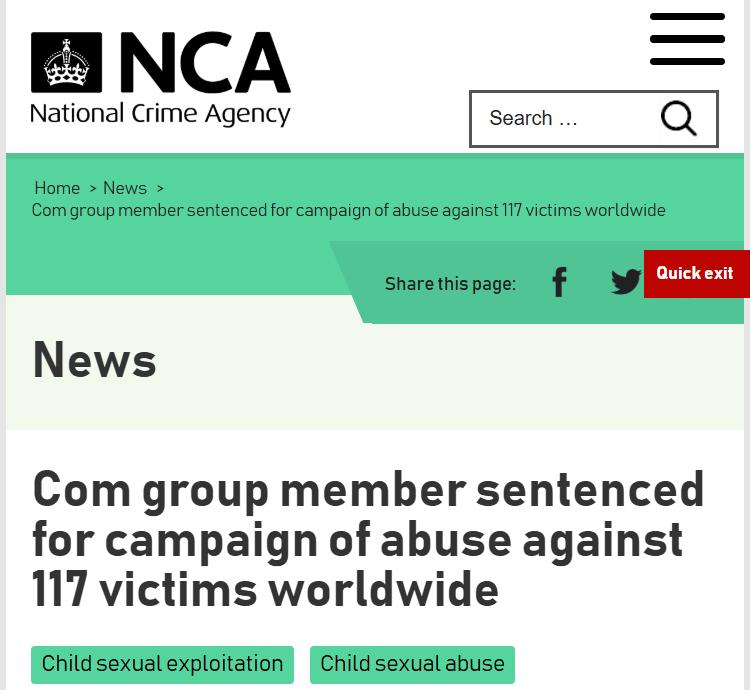
Screenshot: National Crime Agency, August 2026
How the 764 group targets children
Police describe the same pattern again and again. An NCA officer told the BBC that abusers are “very supportive at first”, and that the harm starts small and then grows while the grooming carries on, until the child feels there is no way out.
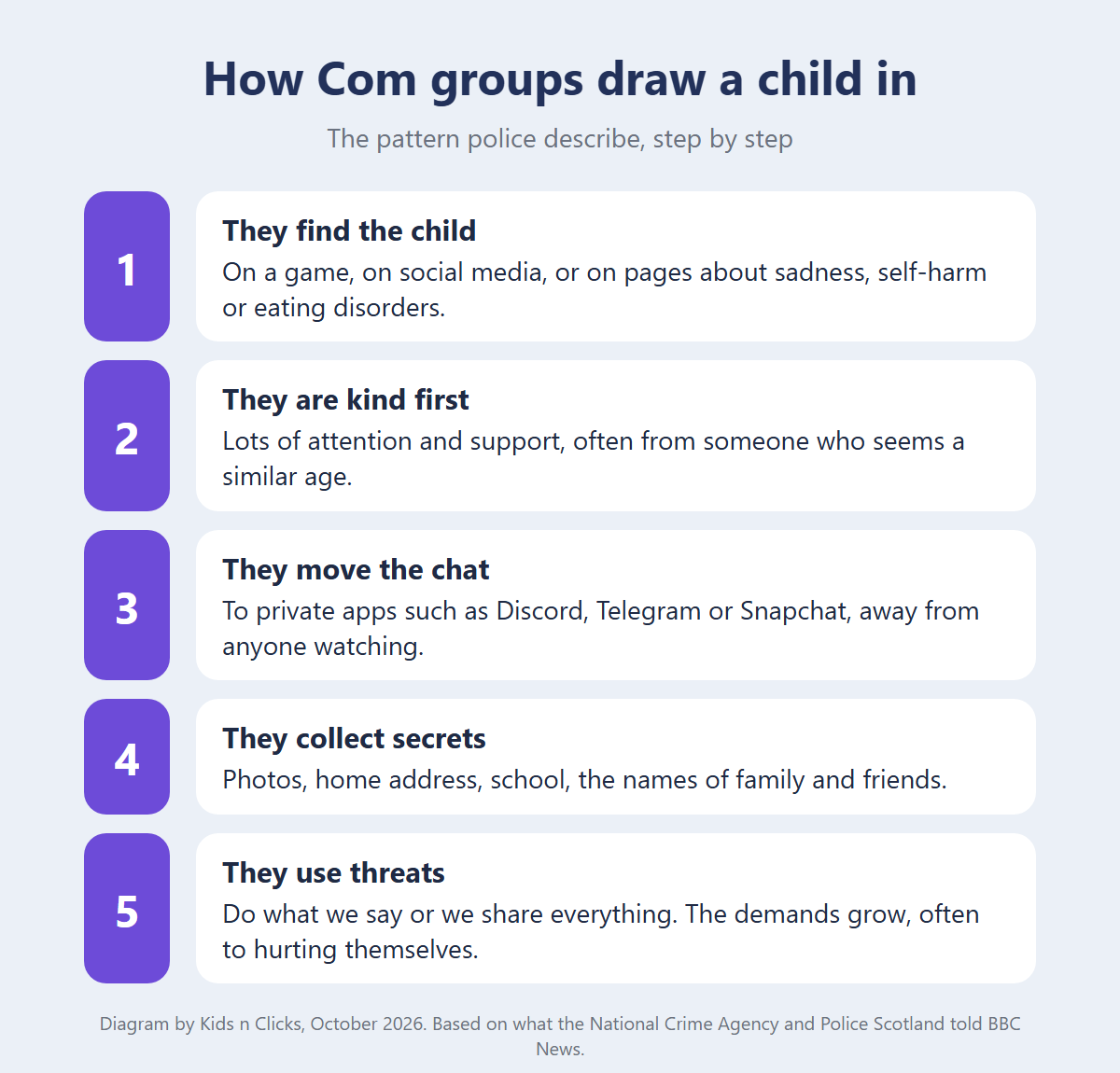
Some children face more risk from the 764 group and similar networks than others. In January 2026, the Molly Rose Foundation and the safety company Resolver found that Com groups often target children who already feel lonely or left out: children who have been through hard times, neurodivergent children, and children who feel excluded because of their race, culture or LGBTQ+ identity. The groups also look for children on pages about self-harm or eating disorders, because those children are already struggling.
Parven explains how online grooming works, and how predators build a child’s trust:

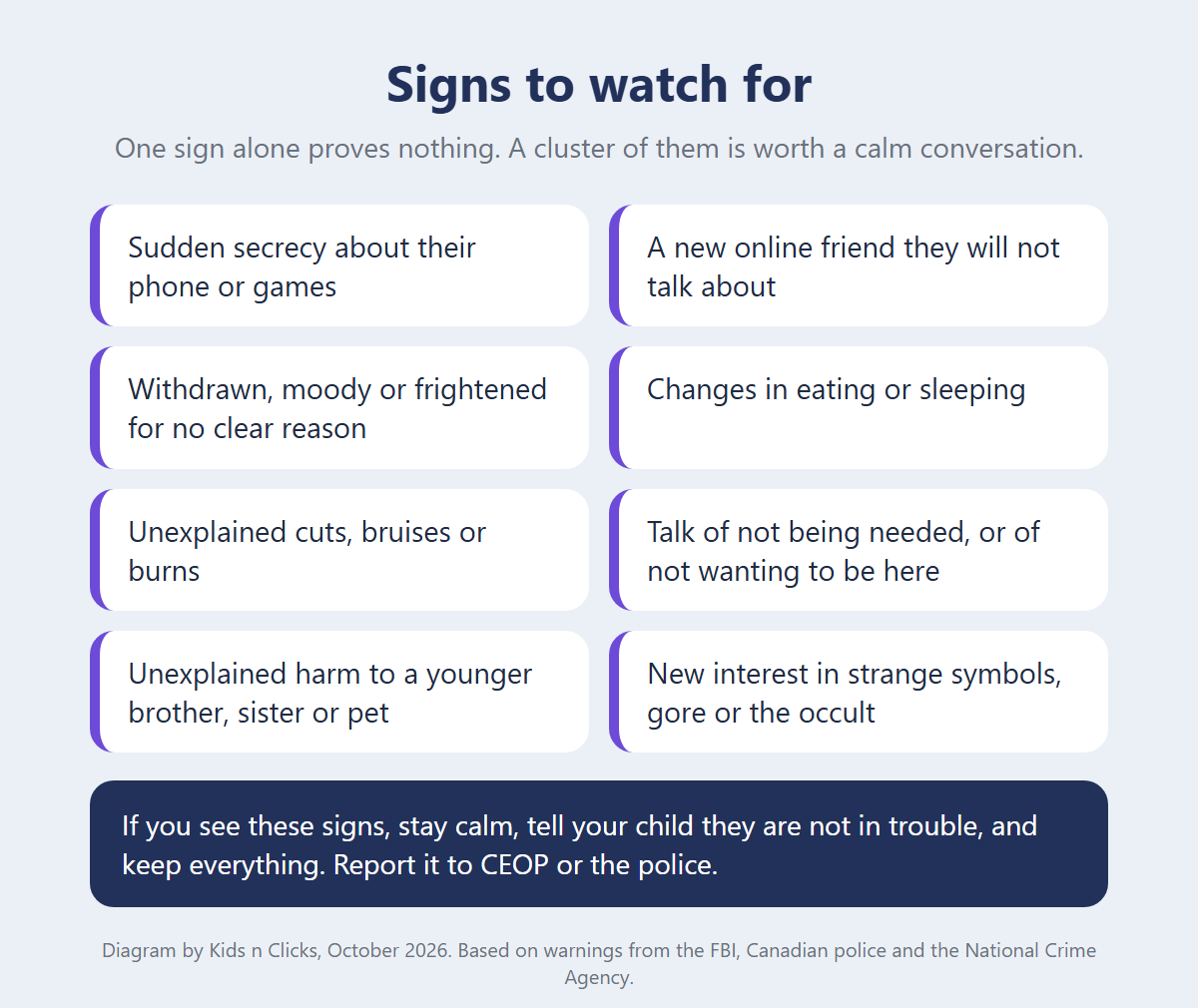
Signs your child may be targeted by the 764 group
No single sign proves anything, and many of them overlap with ordinary teenage moods. A cluster of them, appearing suddenly, is worth a calm conversation.
What to do if you are worried about the 764 group
| Step | What to do | Why it matters |
|---|---|---|
| 1. Stay calm | Tell your child they are not in trouble, whatever they have done or sent | Groups tell children their parents will be angry. A calm reply breaks that hold. |
| 2. Keep safe first | If your child is hurt or in danger, call 999. For injuries, contact your GP or NHS 111. | Their safety comes before any evidence. |
| 3. Keep the evidence | Write down usernames, app names and dates. Do not delete the account or the chats. | Police need these to find the abuser. Never copy or forward any image of your child: tell the police it exists instead. |
| 4. Report it | Report to CEOP, the child protection command of the National Crime Agency, or to your local police on 101 | Police forces across the UK now investigate Com cases |
| 5. Get support | Childline 0800 1111 for your child. YoungMinds Parents Helpline 0808 802 5544 for you. Samaritans 116 123, any time. | Children often need help long after the contact stops |
Some children are pushed into hurting a brother, a sister or a pet, or into recruiting other children. They are still victims. The Molly Rose Foundation has asked prosecutors to make sure police treat young victims of Com groups as victims, not offenders. If your child has been made to do something they are ashamed of, say plainly that the person who made them do it is to blame.
How to protect your child from Com groups
Talk before anything happens. Tell your child that some people online pretend to be kind so they can hurt children, and that anyone who asks them to keep a secret, send a photo or hurt themselves is someone to tell you about. Say that they will never lose their phone or games for telling you.
Know where your child chats. Ask which games and apps they use to talk to people, including Discord and Telegram. Many parents check the big social media apps and miss the chat apps that gamers use.
Look at friends lists together. Every few weeks, scroll through their friends and followers with them. Ask who each person is. Anyone your child has never met in real life is worth a conversation.
Use the settings, but do not rely on them. Settings that limit who can message your child help, and our guide to Roblox parental controls shows how they work on one of the most popular games. Police in the US and Canada warn that settings alone will not stop these groups. Your relationship with your child does more.
Notice when they are struggling. These groups look for children who are already low. If your child seems lonely, unhappy or is searching for content about self-harm, support for that worry protects them online as well.
Our post on sextortion covers a closely related crime, where strangers blackmail children with images for money, and many of the same steps apply.
Talking to boys about Com groups
The NCA says most Com offenders are teenage boys and young men, often lonely or bullied themselves, who find status online by hurting others. That makes this a conversation for parents of boys too. Ask your son what he sees in group chats and on gaming servers, and what the older boys there talk about. The NCA says members share extreme and violent images that slowly make cruelty feel normal, so a sudden taste for gore is worth asking about.
Parven reviewed the Netflix drama Adolescence, which shows how quickly an ordinary boy can be pulled into harmful online spaces:
Social media and online safety training
Our TikTok, Snapchat and Trending Social Media Deep Dive covers this properly: how strangers reach children through games and private messages, which privacy settings parents should check, and what to do when something goes wrong.
It is a practical session that takes parents inside the apps their children use, rather than another list of online risks. It lasts one hour, runs online, and has no minimum or maximum group size, so it works for schools, parents’ groups, community organisations and employers who want to support the working parents in their team.
If you run a school, a parents’ group or a workplace, book the social media session here or connect with Parven on LinkedIn.
If this post has raised worries for you or your child, Childline is free on 0800 1111, the YoungMinds Parents Helpline is on 0808 802 5544, and Samaritans answer any time on 116 123.
Parven Kaur is a digital parenting and online safety expert, and the founder of Kids n Clicks. She won the Scottish Cyber Security Award, and she sits on the National Board of Advisors for Barnardo’s Scotland.
Was this helpful?
Good job! Please give your positive feedback
How could we improve this post? Please Help us.